 |
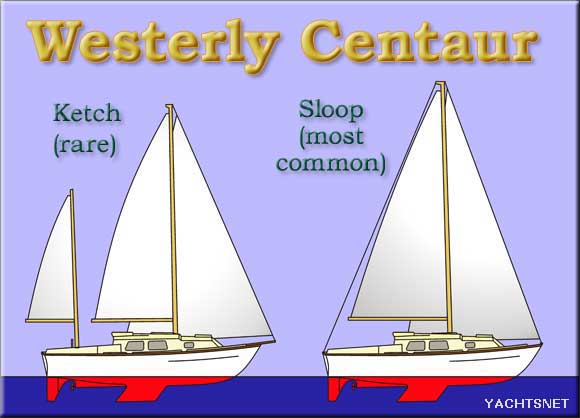
Sailplans, from Laurent Giles' plans |
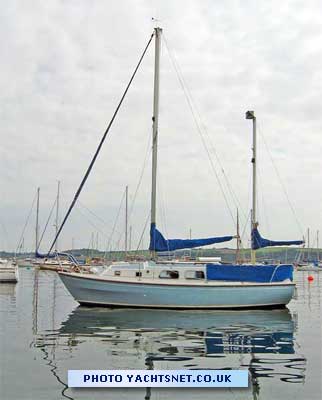
Unusually for Westerly, the ketch rig versions
were not sold under a different name. The same hull was also used
for a centre-cockpit version, but this was sold as a Westerly Chieftain |
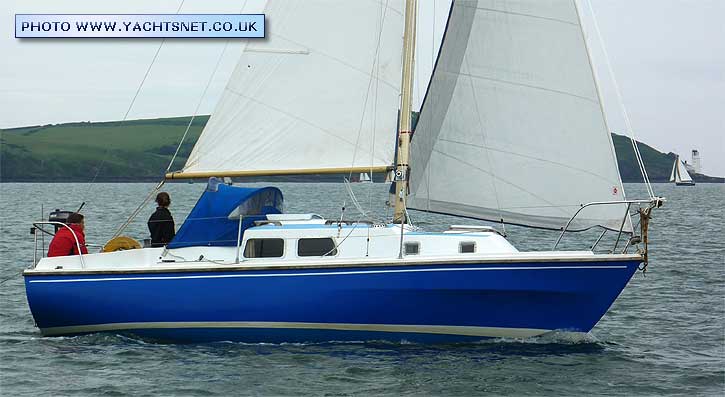
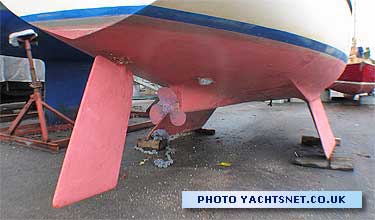
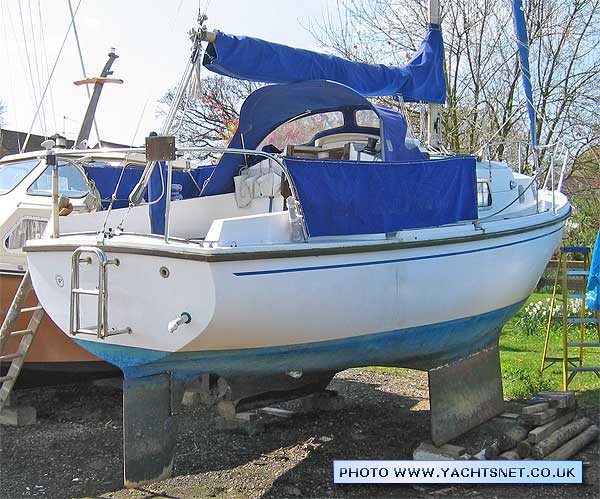
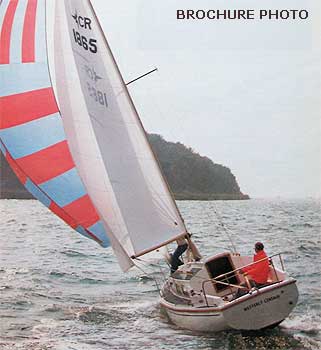
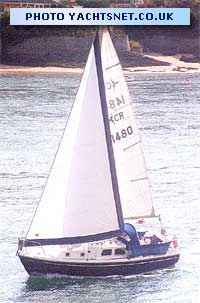
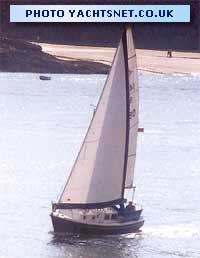
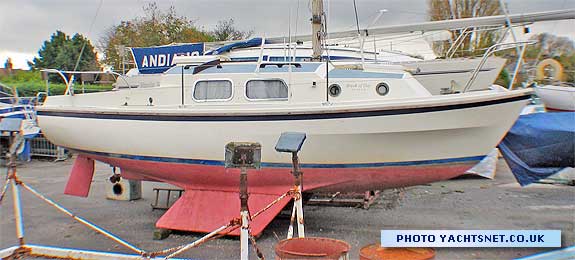
The sailing performance is helped by carefully designed bilge
keels which are handed port and starboard with a two degree toe-in,
so that once the boat heels under sail the more vertical leeward
keel is developing lift to windward. Most Centaurs had 25 bhp
Volvo diesels, though a few were built with different engines,
usually the smaller 13 hp Volvo, though some had 25 or even 30
hp Watermota diesels.
|
 |
|
 |
|
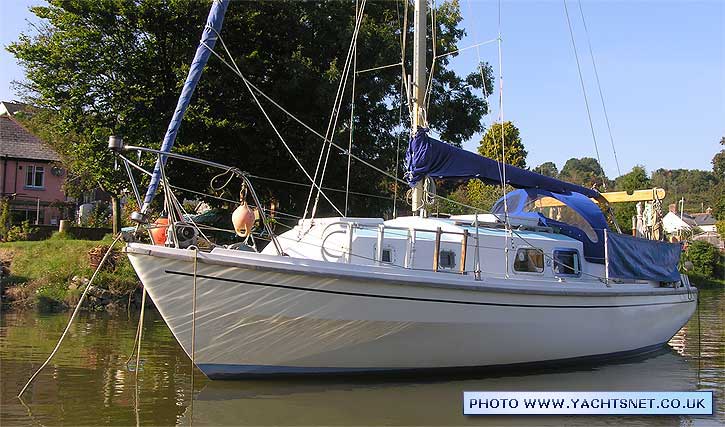
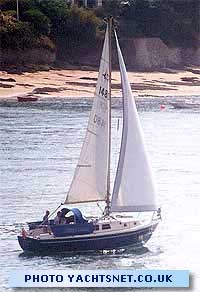
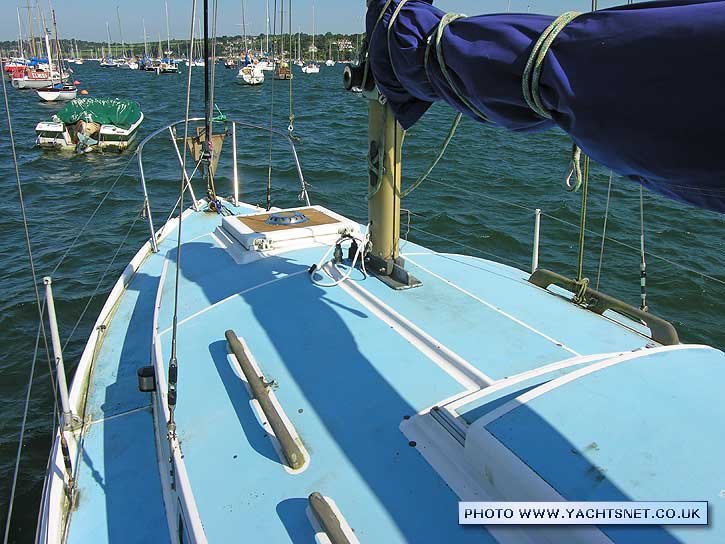
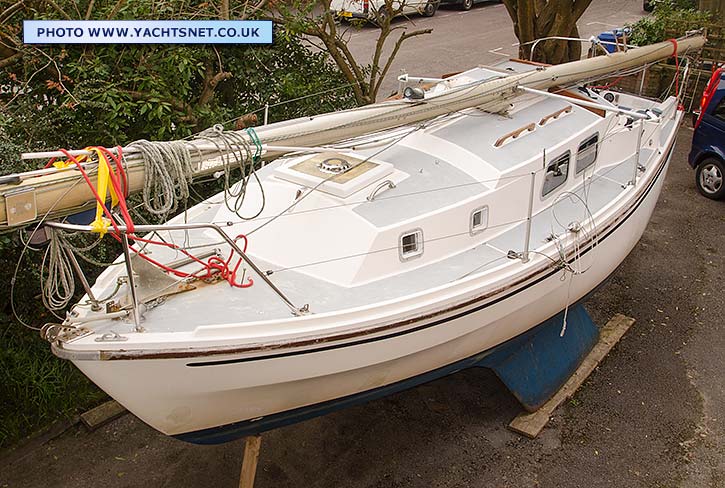
Above deck, the
Centaur remains popular because her deep cockpit and wide side decks
serve to create a sense of safety when aboard. Another reason for
the continuing popularity of Centaurs is the fact that they are
a stiff, powerful boat. Whether sailing or motoring, the Centaur's
handling is always predictable. |
As with all other Westerly Marine yachts the Centaur
was massively built. This was partly a result of previous building
experience within the company and also a reflection of the state
of GRP technology at that time. All Centaurs were built to Lloyds
specifications which meant that the building processes were rigorously
monitored and all materials had to be approved by Lloyds in order
that a certificate could be issued. Although long out of production
they still represent excellent value for money, and offer a very tough, seaworthy and spacious (for 26 ft) yacht at low cost. |
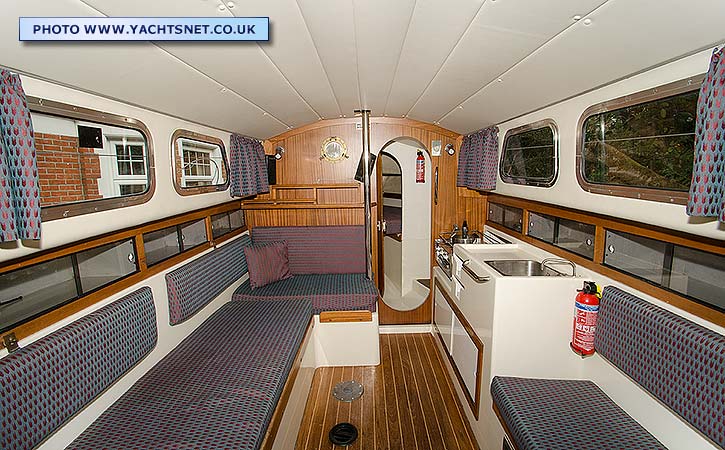 |
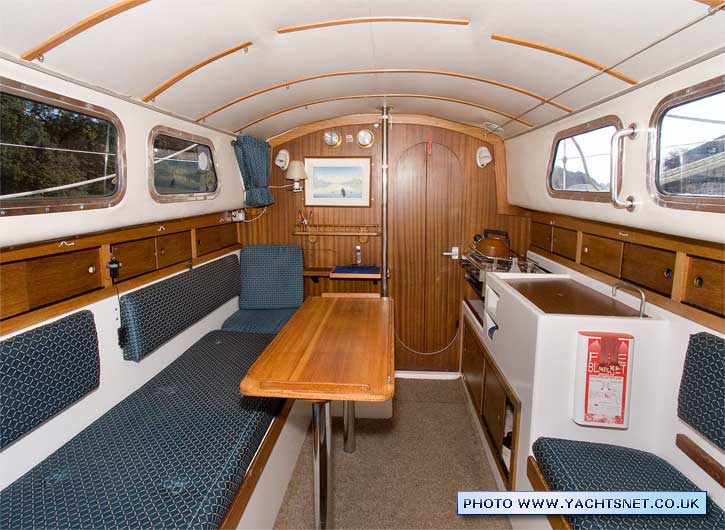
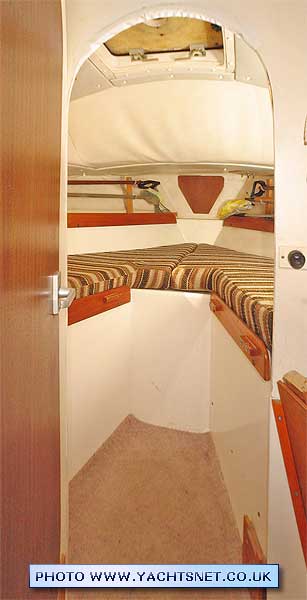
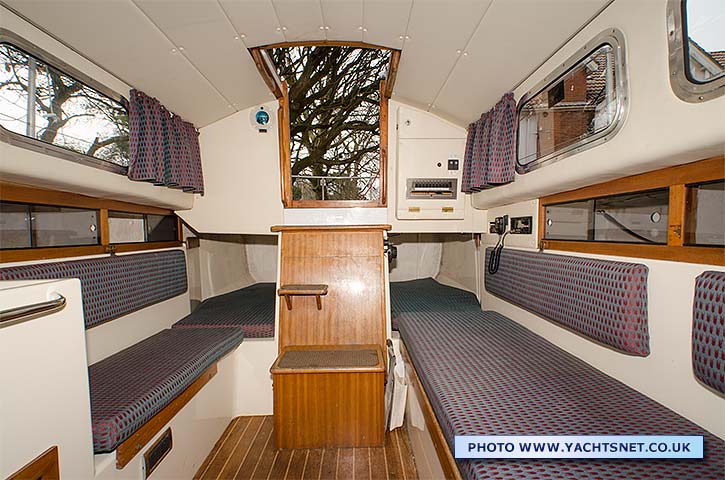
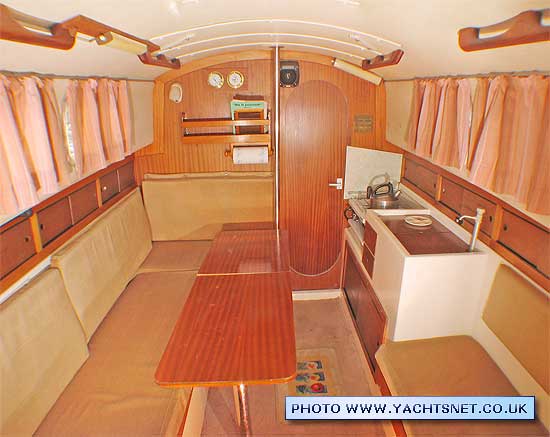
The photos above and below show a Centaur with the interior re-upholstered
and very neatly re-headlined - possibly better than when new |
 |
|
Yachts
seen here are no longer for sale - the data is online as a
free information service for buyers researching boat types.
THE PHOTOGRAPHS ARE COVERED BY COPYRIGHT, AND MAY NOT BE REPRODUCED
WITHOUT THE PERMISSION OF YACHTSNET LTD.
Go to our brokerage
section for boats currently for sale |
|
Centaurs were built with a choice of three different
interior layouts. The yacht shown in the interior photos immediately above and below have the most
commonly found 'B' layout, which provides up to six berths. The saloon table is removable, on two metal support posts. |
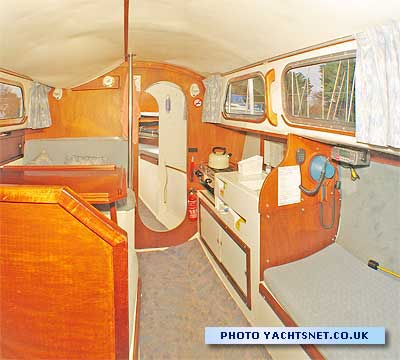 |
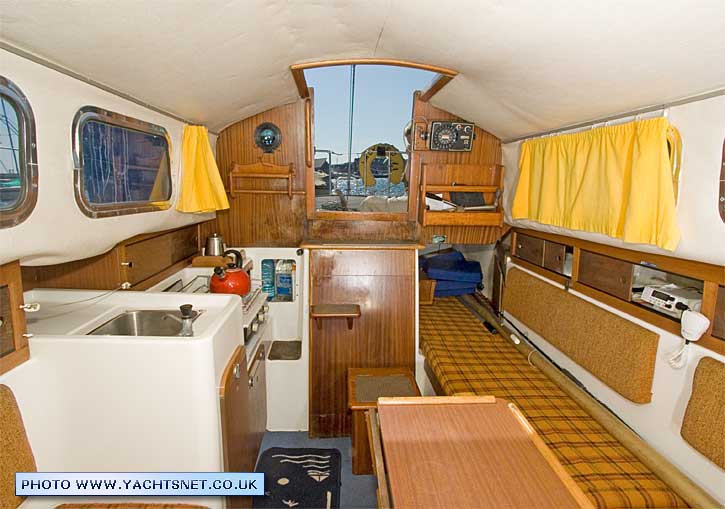
Left: The 'A' layout has a dinette
which converts to a double berth to port, and is identical to the
'B' to starboard. We have no photo of the 'C' layout, but this was
similar to the 'A', except that the galley was aft, with a seat
forward to starboard. This resulted in the loss of the starboard
quarterberth, making this a four-berth layout. |
|
Some of the photos here also illustrate one of the recurrent
(though minor) problems with all early Westerlys - that the foam-backed
vinyl headlining becomes detached from the ceiling and droops. It is difficult
to stick it back sucessfully, and the best "quick cheap fix" solution (apart from
complete removal and replacement) tends to be to use thin battens
to retain it, as in the photo above. |
|
One of the two commonly known structural
problems with Westerly Centaurs is that prolonged and repeated drying
out, particularly on sand or mud, placed excess sideways "splaying"
pressure on the keels. The problem is totally curable by adding
reinforcing layers of GRP to the interior of the keel roots and rebedding the keels. The
other problem, which generally only affected some early boats, was
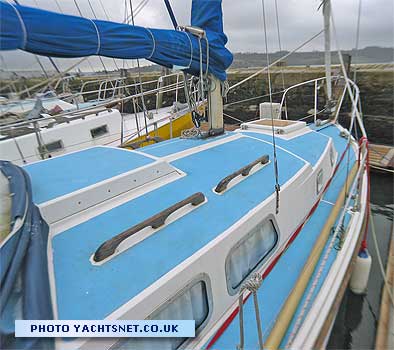
that the shroud attachment points on the coachroof were fitted above
a portlight and inadequately tied in to the hull/deck structure.
|
|
|
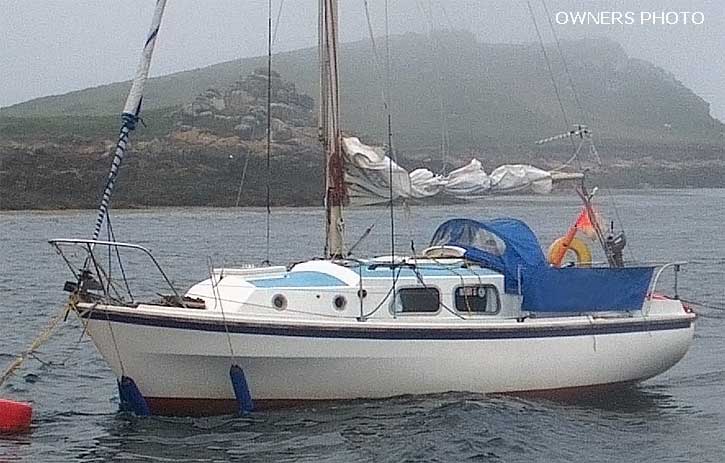
There were a number of minor variations
between Centaurs built in different years - for example Centaurs
built up to the mid-70s had unsupported spade rudders, whilst later
boats had half skegs (photos left and above).
Very early boats are distinguishable by round and not rectangular
forward ports, and sometimes also had shrouds attached directly
above the forward of the main saloon windows - a cause of leaks,
and sometimes some stress cracking of the gelcoat around the windows.
|
|
|
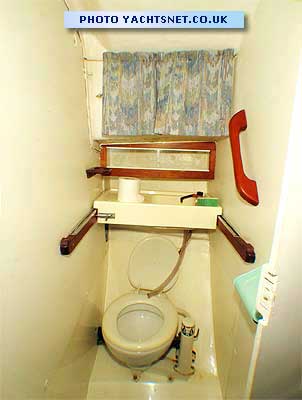
The heads compartment normally had a pull-out washbasin above
the WC, with hanging locker space opposite, though some boats were clearly supplied with no basin in the heads.
|
|
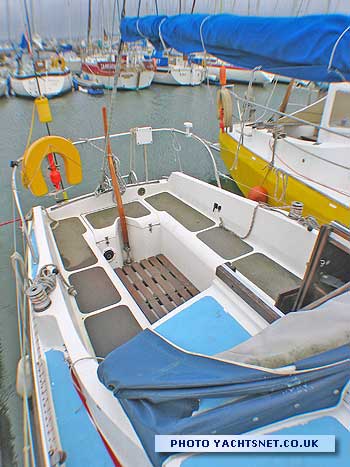
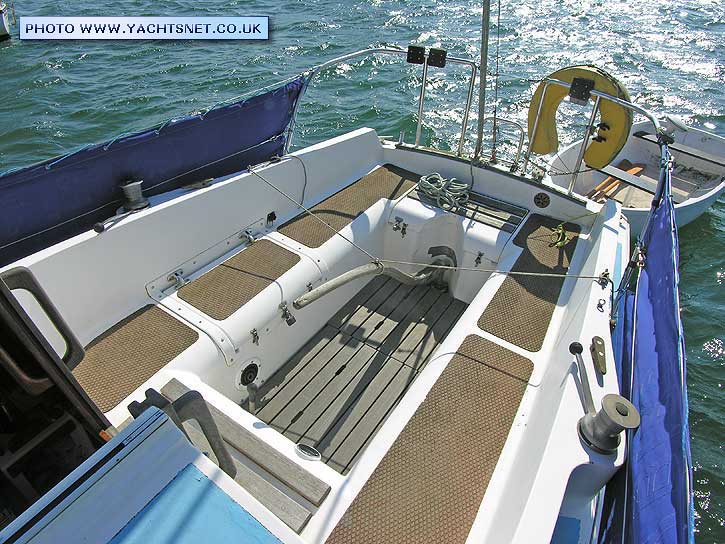
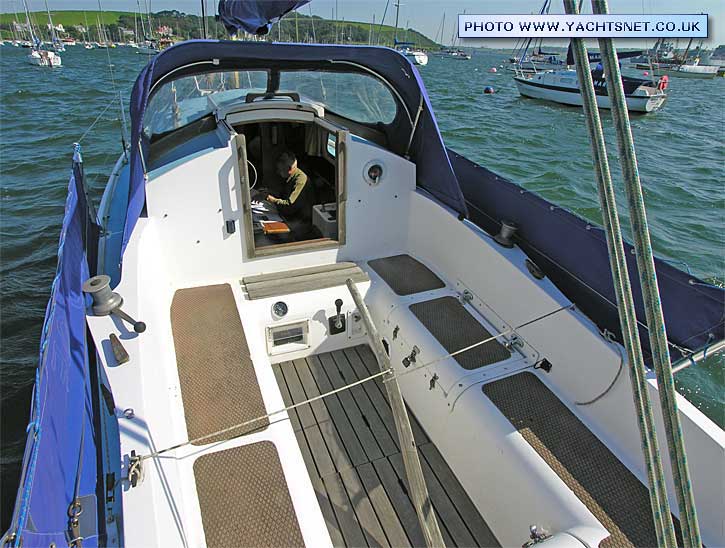
Tiller-steered, the Centaur's self-draining
cockpit is deep and comfortable. Under the forward section of these
footwell gratings is a rubber-sealed removable access hatch to allow
the engine to be serviced, or even removed if necessary. Aft is
a large stern locker, within which is a gas bottle compartment.
In some early boats this gas locker may not be vented, though many
will have been modified by now. Some boats have had vented gas lockers
fitted under the side seats - a kit for this conversion is available, though it sometimes entails losing part of a quarter berth.
|
|
|
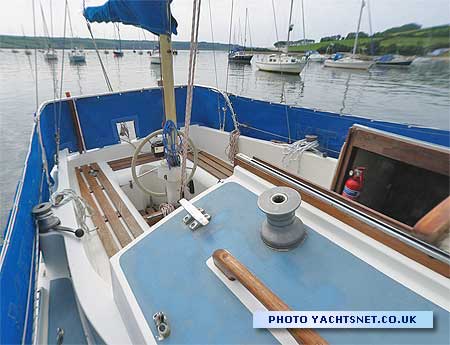
Below: The Centaur ketch has a mizzen mast mounted
in the cockpit, aft of which is the wheel steering pedestal. A stub
bowsprit extends the overall length to almost 28 ft.
|
|