|
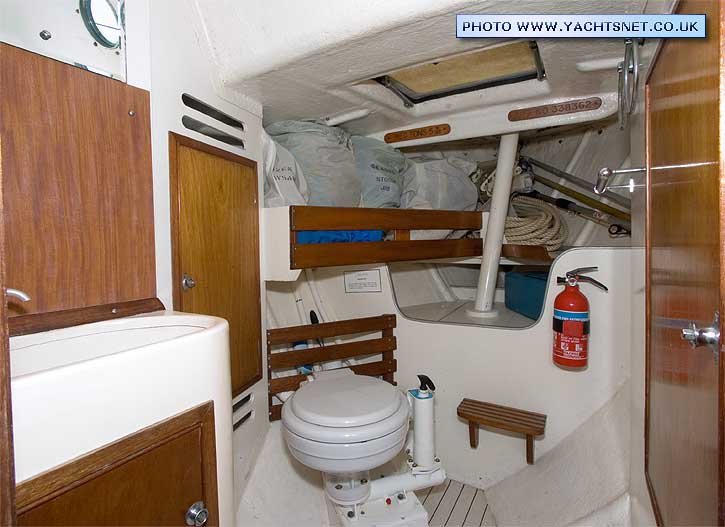
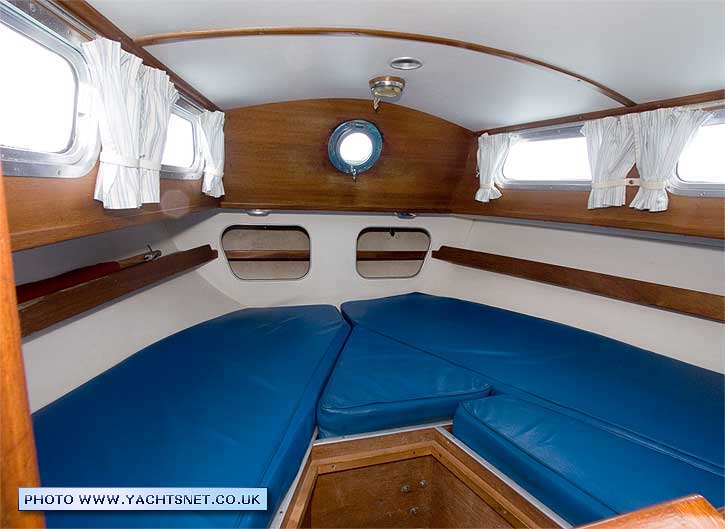
Unusually, Seadogs do not have a conventional forecabin: instead
the forward part contains a spacious heads compartment, with sink
unit and marine WC, plus two hanging lockers, and stowage for
sails and gear, one side of which (to port) appears to be designed
to be used as a childs berth if required. The chain locker is
low in the boat, the chain feeding down from deck via the central
pipe.
|
|
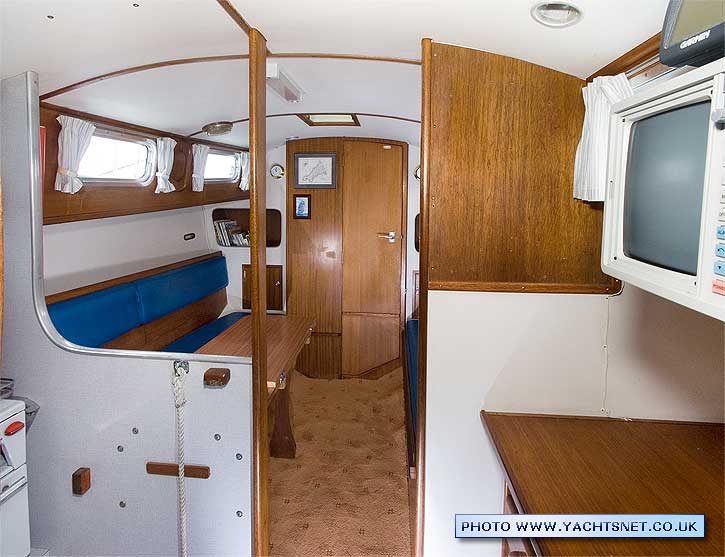
The saloon table folds away almost completely,
to leave a very open interior when the table is not required (photo
below).
|
|
| |
|
There is good stowage behind seat
backs, and in a variety of built-in lockers.
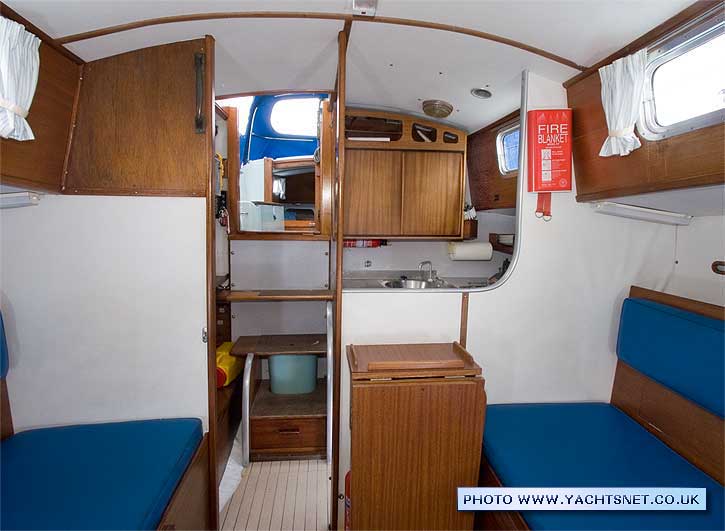
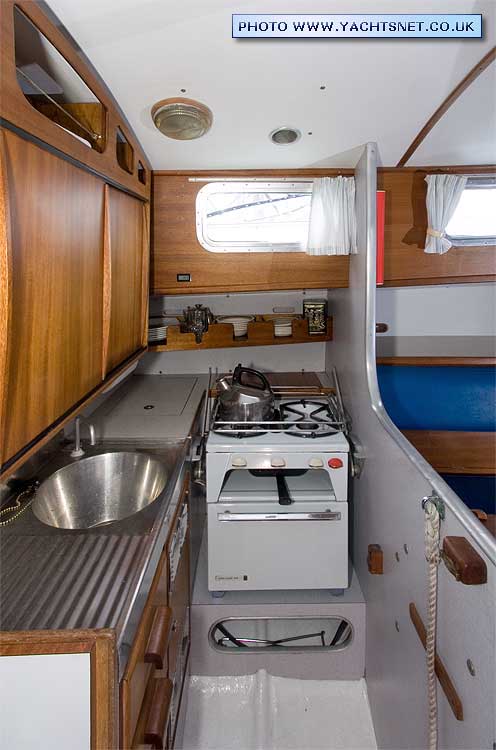
Left: The galley is on the port side, with gimbaled
two-burner, grill and oven cooker, good sized sink and drainer,
and a coolbox.
|
|
Right The chart table is to starboard. A quarter berth aft of
the chart table here forms the sixth berth on board, though best
suited to a small and fairly gymnastic person.
|
|
Yachts
seen here are no longer for sale - the data is online as a
free information service for buyers researching boat types.
THE PHOTOGRAPHS ARE COVERED BY COPYRIGHT, AND MAY NOT BE REPRODUCED
WITHOUT THE PERMISSION OF YACHTSNET LTD.
Go to our brokerage
section for boats currently for sale |
|
|
|
|
|
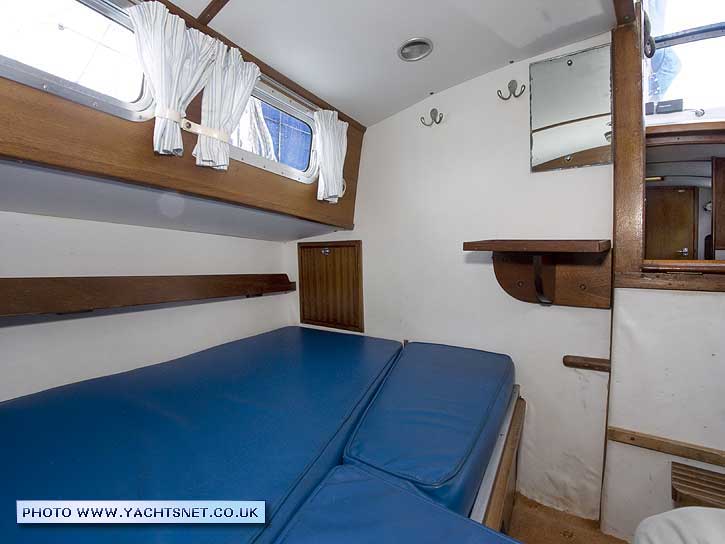
The aft cabin originally had two single berths,
but on most yachts an extra berth section has been added to provide
a small double - or even three if necessary! One of the common problems
with Seadogs is damp getting into the bulkhead at the back of the
cockpit, seen above where the lining is bubbling.
|
|
|
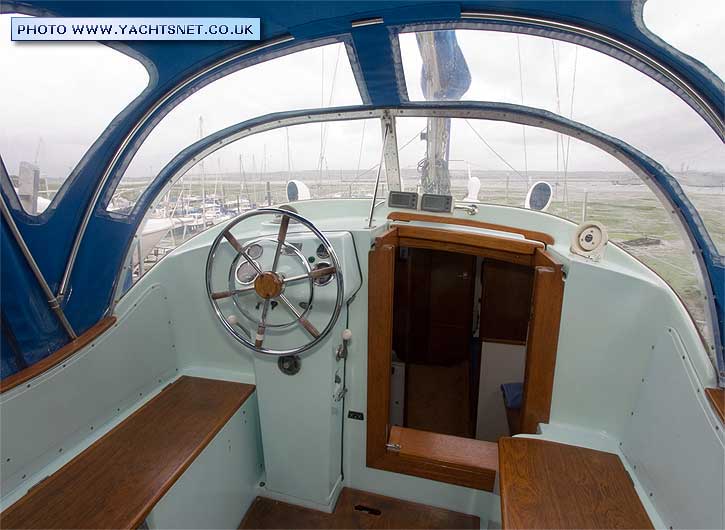
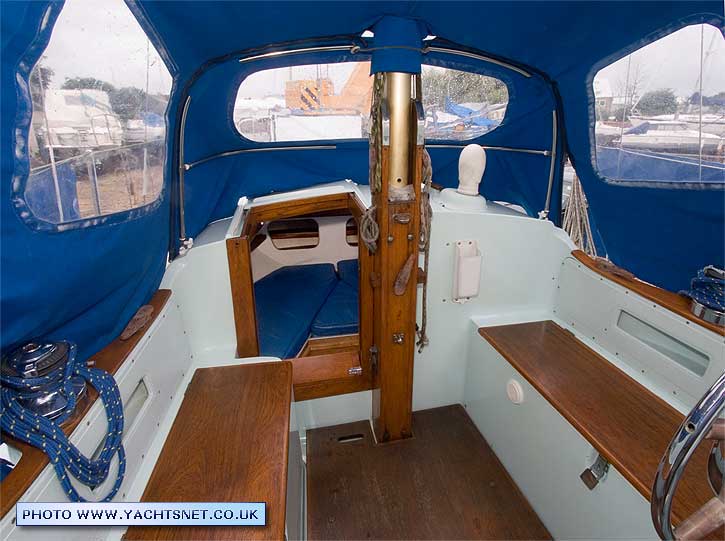
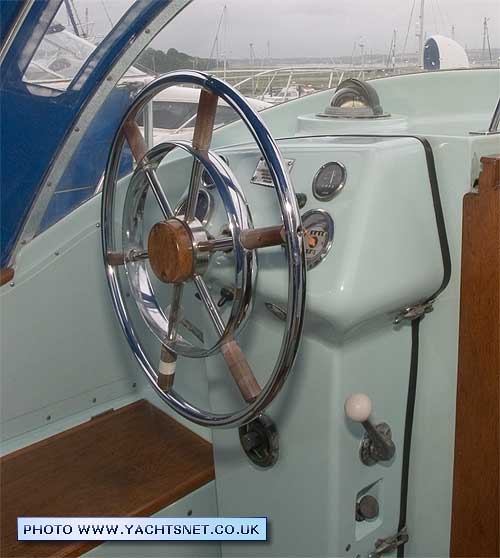
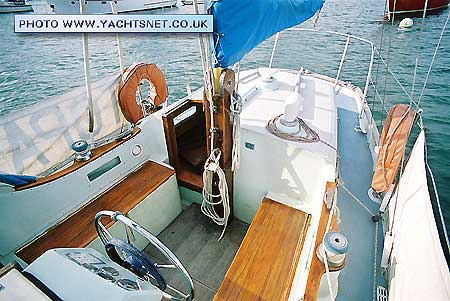
The cockpit is deep, and very well protected.
The view forward from the wheel position is good, through the fixed
windscreen, whether standing or sitting. |
|
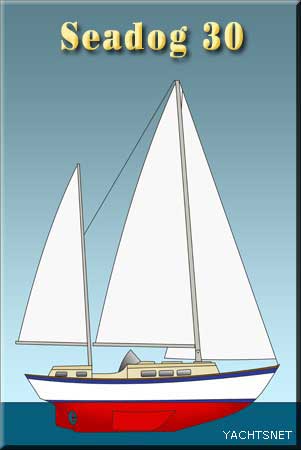
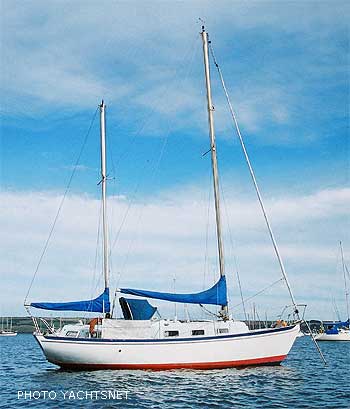
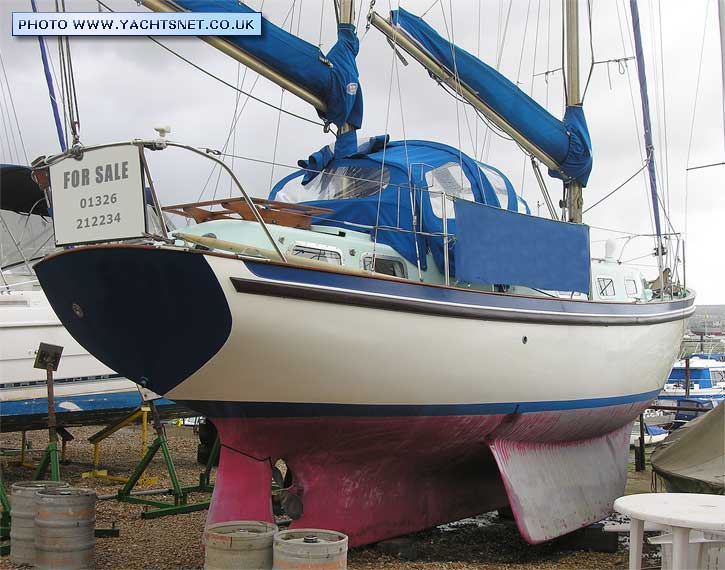
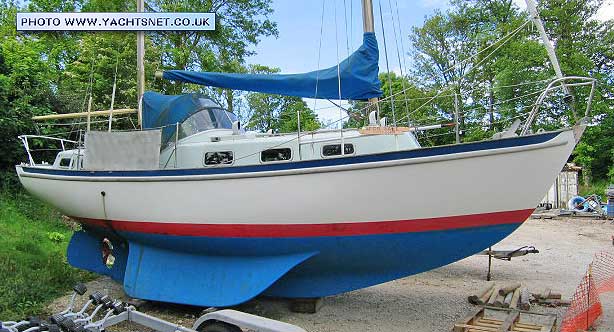
Although conceived and marketed as a motor-sailer,
the Seadog is actually a proper sailing yacht with a fairly powerful
rig - 510 sq feet with main, genoa and mizzen. Many owners report
that in strong winds dropping the main and carrying on under headsail
and mizzen is very effective.
36 hp of diesel is also fairly effective, of course,
in a 30 foot yacht!
|
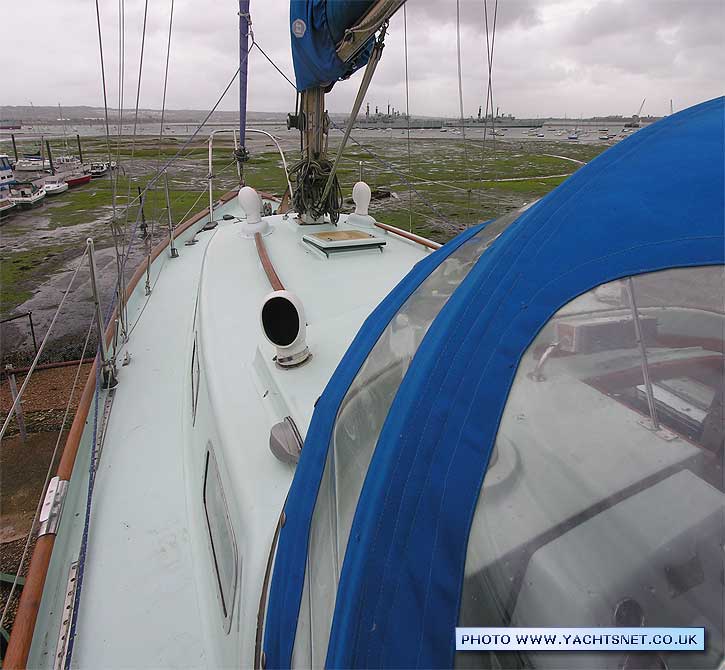
Most Seadogs seem to be fitted with a 'camper'
style cover for the cockpit, with transparent windows, which zips
on to the permanent sprayhood.
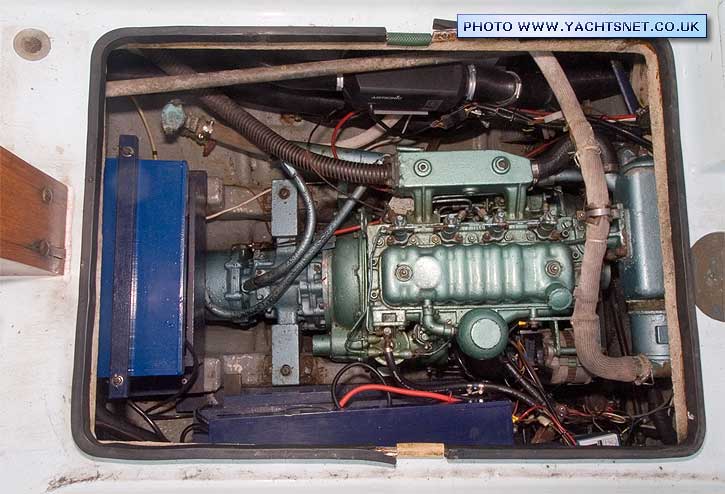
The original engine was usually a Perkins 4/107 or 4018 diesel,
or occasionally a BMC Captain diesel, accessed from two large lifting
panels in the cockpit sole (only one lifted here). Finally, the
masts are mounted in tabernacles to allow raising and lowering without
requiring hiring a crane.
|
|
|