| |
|
|
|
|
|
|
|
| © Yachtsnet Ltd. 2000/2025 |
|
|
|
| |
|
Yachtsnet's
archive of boat details and pictures
|
| |
The following information and photographs are
displayed as a service to anyone researching yacht types.
HOWEVER THE PHOTOGRAPHS AND TEXT ARE COVERED BY COPYRIGHT, AND MAY NOT BE REPRODUCED WITHOUT THE PERMISSION OF YACHTSNET LTD. Details
and photographs are normally based on one specific yacht, but could
be a compilation. No reliance should be placed on other yachts of
the same class being identical. Where common variations exist,
we have endeavoured to indicate this in these archive details. |
Contessa 32 |
Brief Notes |
Builder |
Several builders: mainly Jeremy
Rogers, but also Macbar Marine and M. J. Slack in the UK,
and J. J. Taylor in Canada |
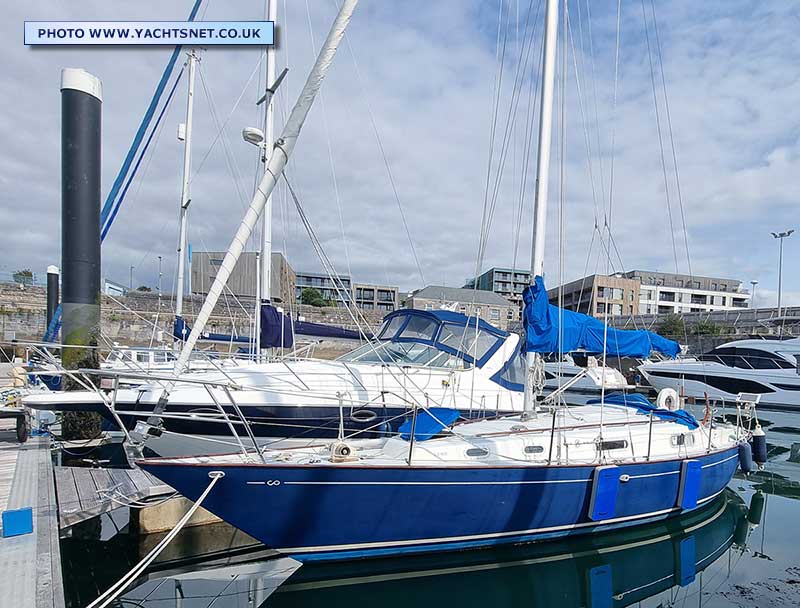
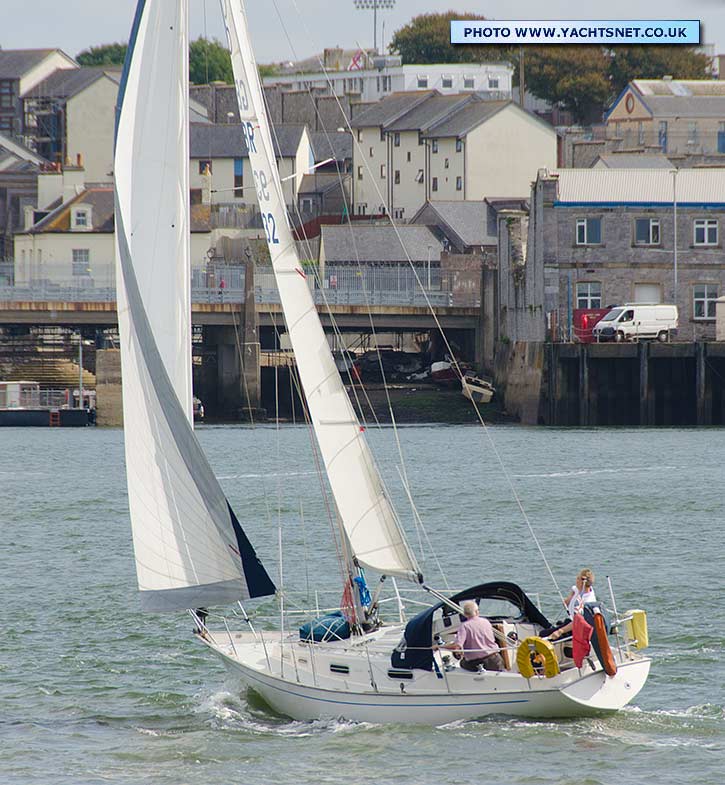
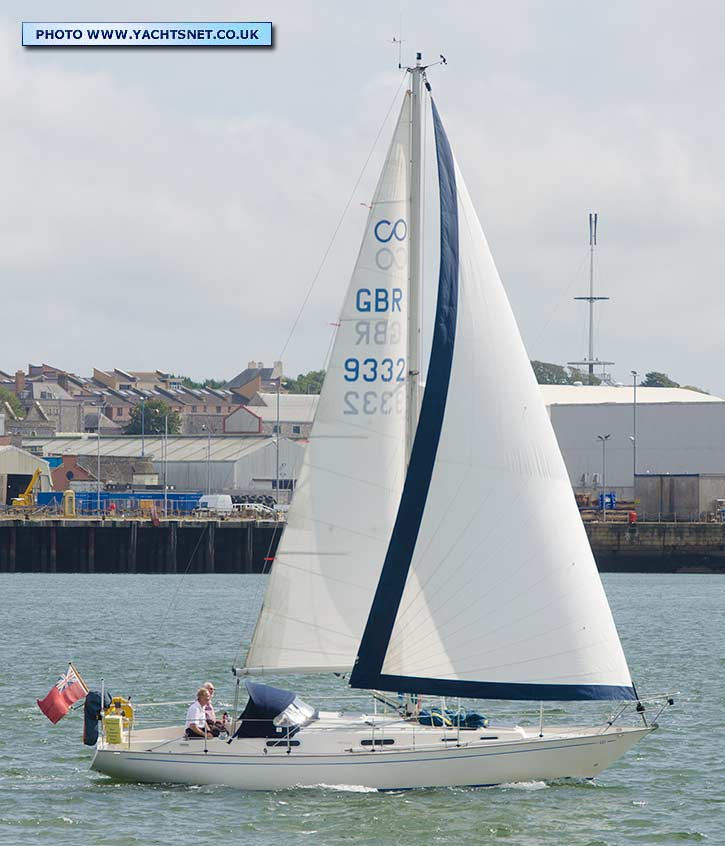
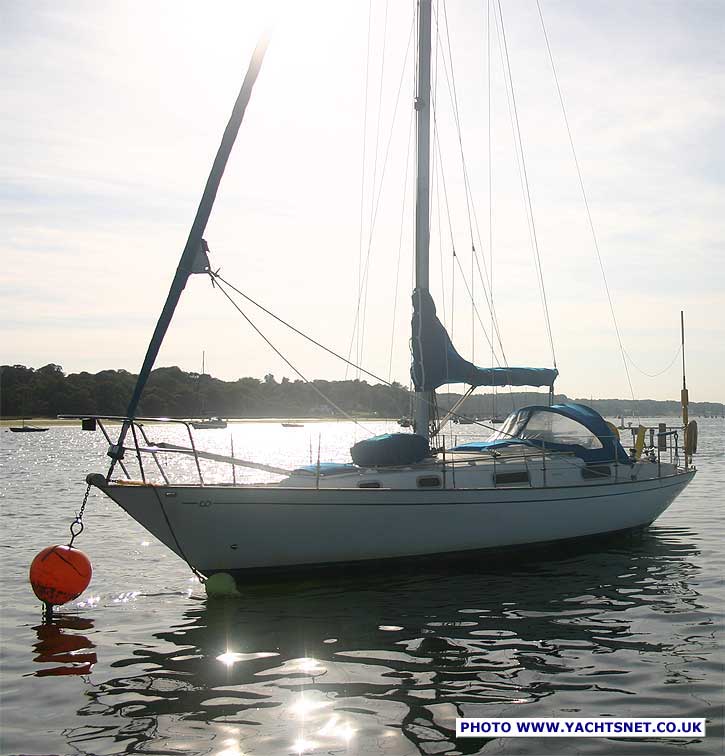
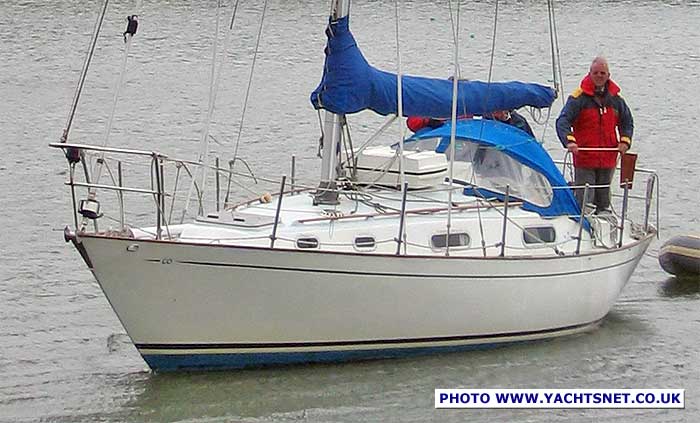
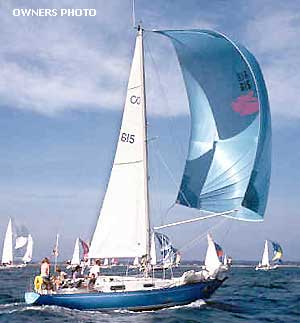
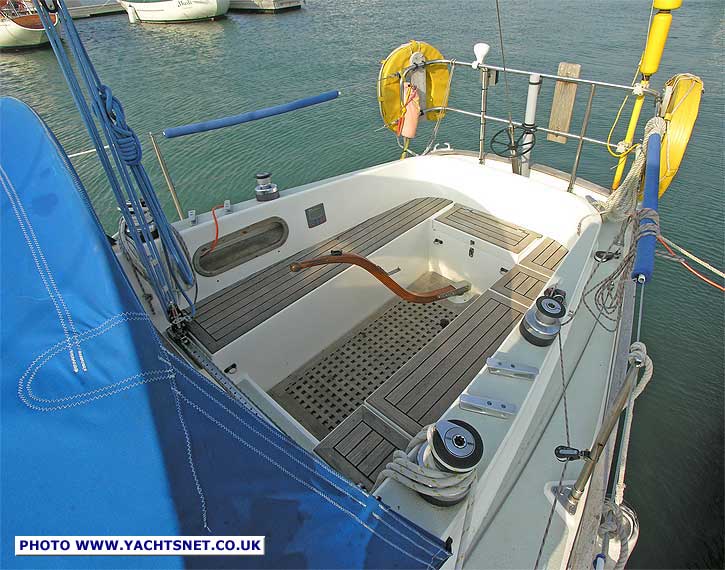
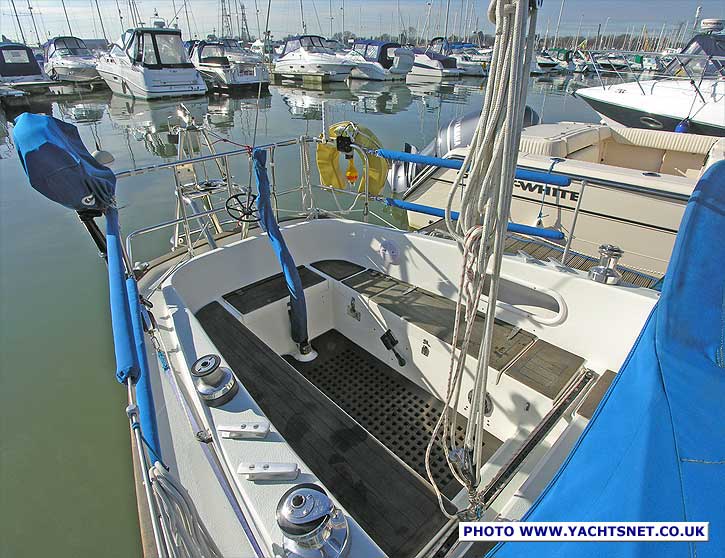
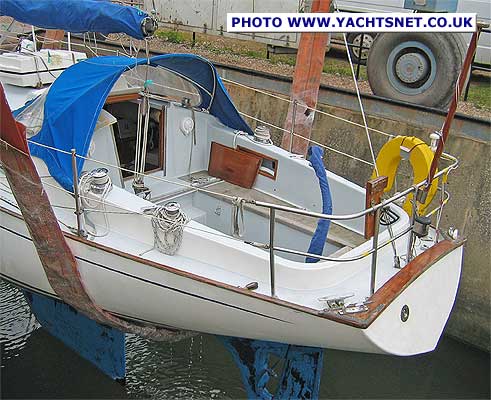
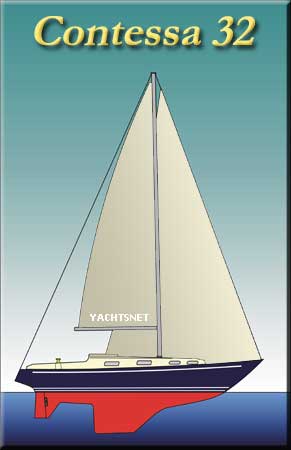
The Contessa
32 is a classic cruiser-racer, whose combination of speed
and seaworthiness was proved in the ill-fated 1979 Fastnet
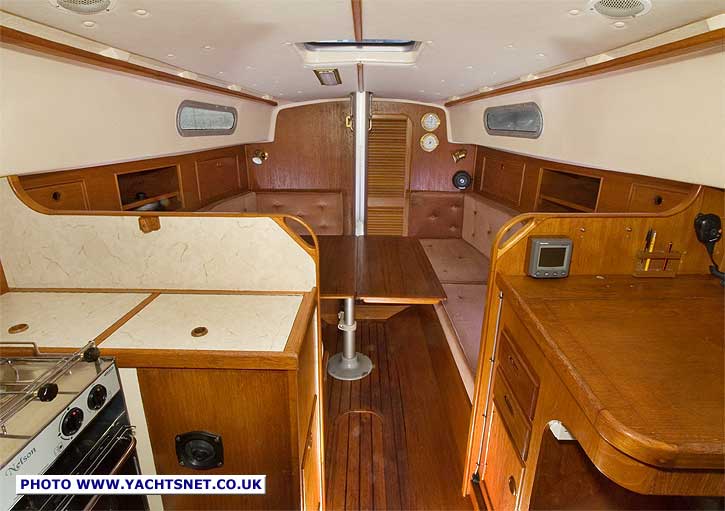
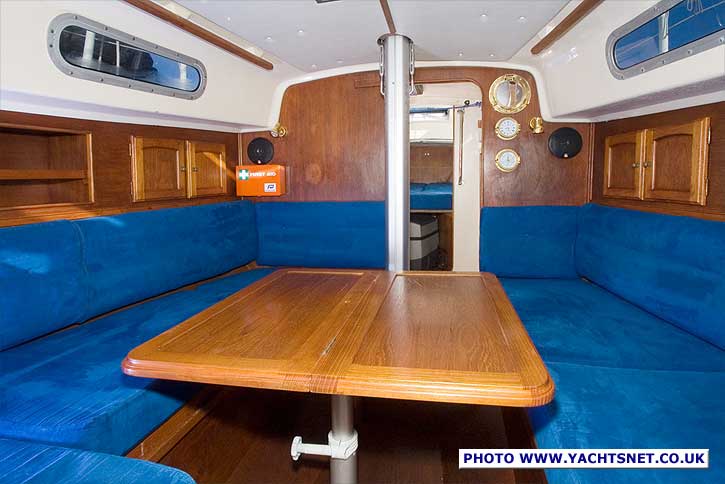
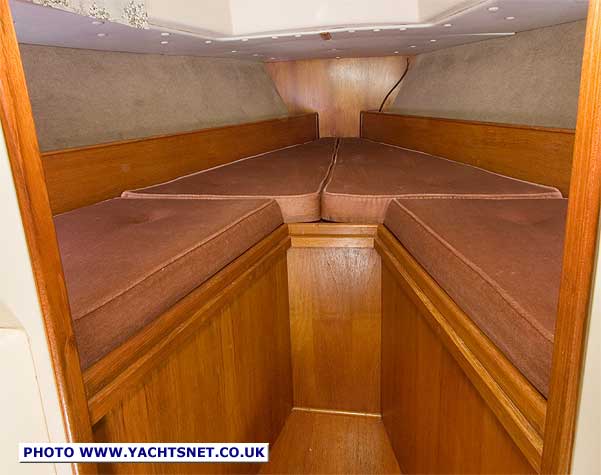
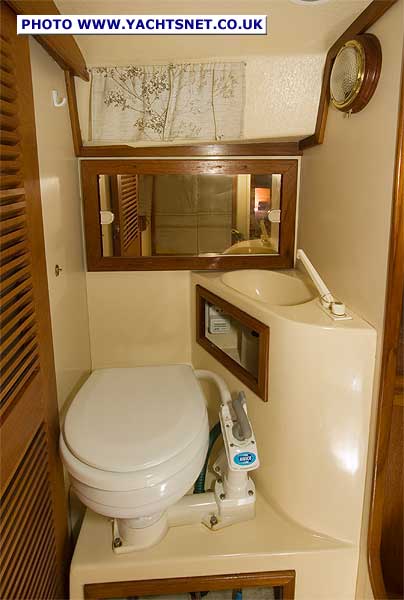
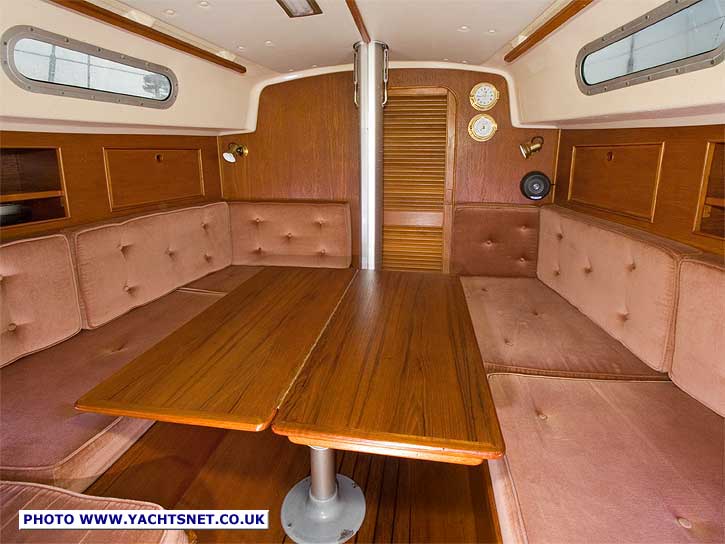
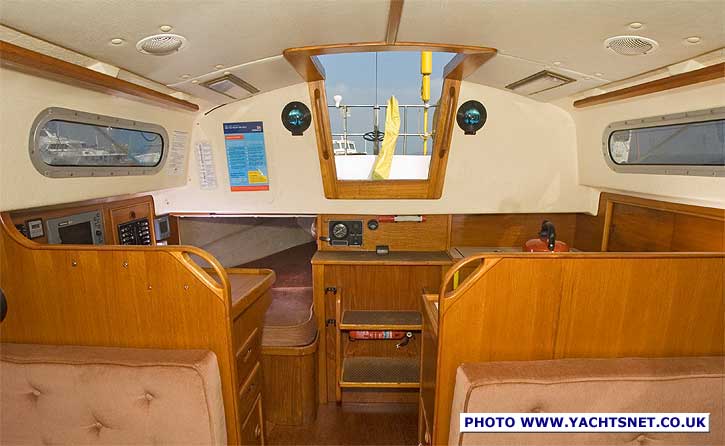
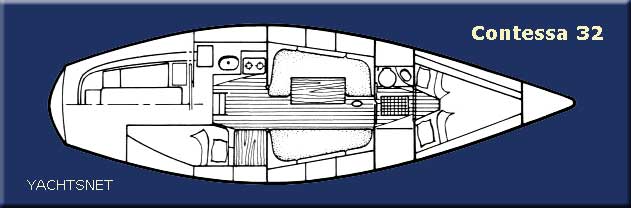
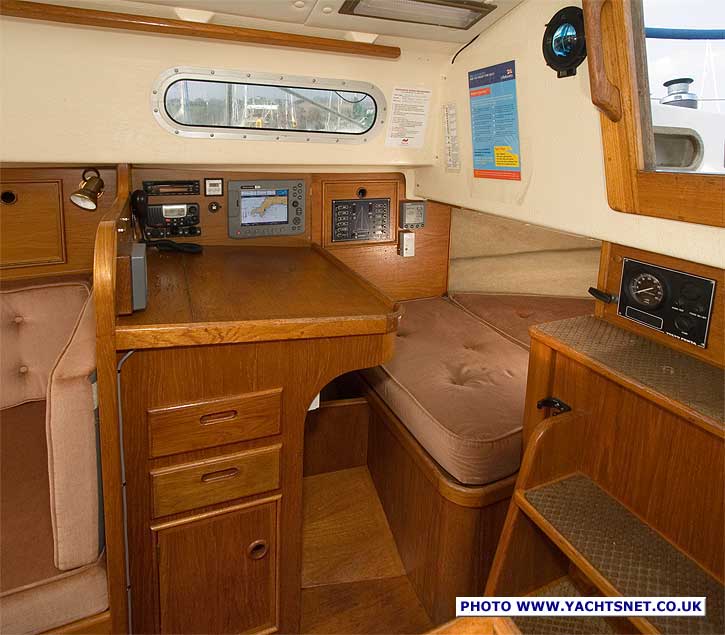
Race. By "modern" standards the interior is cramped for a 32-footer, but the Contessa can make passages in weather that will keep most other boats firmly in harbour. The very few recently built boats from the 1990s and 2000s can command very high prices |
Length OA |
32' 0" |
Sail Area |
562 sq ft |
Length WL |
24' 0" |
Rig |
Sloop |
Beam |
9' 6" |
Cabins |
2 |
.Draught |
5' 6" |
Berths |
6 |
Displacement |
9,520 lbs |
Engine type |
various |
Ballast |
4,500 lbs |
Engine bhp |
10 - 25 |
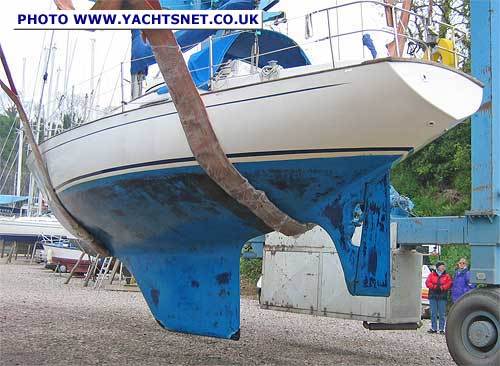
Keel type |
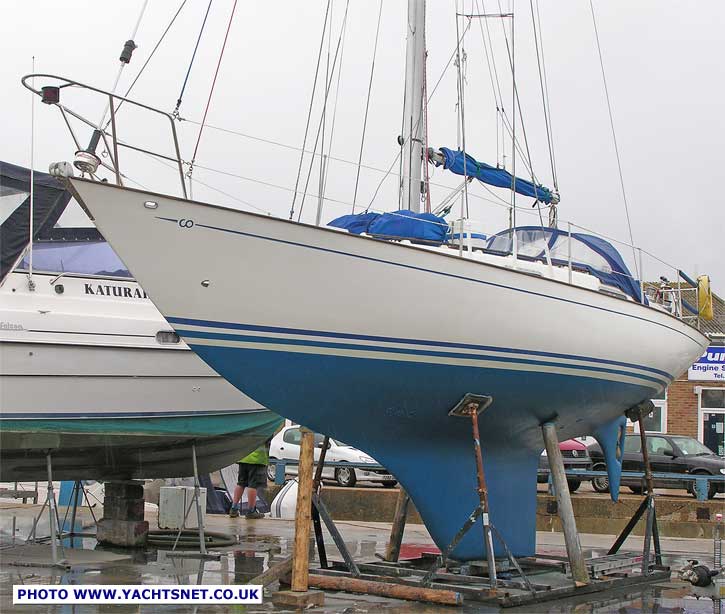
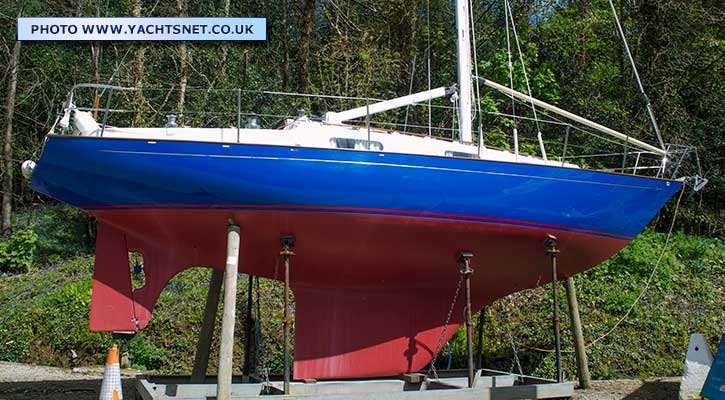
Fin and skeg |
|
The Contessa 32 was designed by David Sadler in 1971, and rapidly became very popular, both as a fast cruiser, and as a one design racing class. Series production by Jeremy Rogers Ltd. continued until 1982, by which time the cost of production building in the UK to the Contessa level of quality was becoming uneconomic. Jeremy Rogers then started "reconditioning" older yachts. In 1996 Rogers once again started limited production, of what is now a very expensive 32-footer - see details here
The few latest Rogers Contessa 32s have minor alterations to the original 1970/80s construction speciicatiion, whilst keeping them "in class" for class racing.
In the interim period in the late 80s and early 90s between Jeremy Rogers ceasing and restarting production a small number of boats were built by other builders: three were believed to have been fully built by Macbar in Poole, plus one other hull only. After Macbar went into administration, the moulds went to Mike Slack who built around 25 boats in Lowestoft, these later boats mostly with very high quality fitout. In around 1996 Rogers bought back the moulds and started again offering Contessa 32s for sale, though only with bvery limited build numbers, many being really high qaulity semi-custom fit-outs, some boats including hybrid or electric drives. Rogers also regularly carries out refurbishments of older Contessa hulls.
About 80 yachts were also built in Canada by J. J. Taylor, from a set of moulds taken from a Lymington-built Contessa that was shipped to Canada. These were to the same hull and deck moulding specifications, but used more internal GRP mouldings rather than a wooden structure, and many of these were wheel-steered rather than have a tiller. These Canadian boats are thus slightly lighter weight, and the interior a little brighter. |
|
|
 |