| |
|
|
|
|
|
|
|
| © Yachtsnet Ltd. 2000/2026 |
|
|
|
| |
|
|
Yachtsnet's
archive of boat details and pictures
|
| |
The following information and photographs are
displayed as a service to anyone researching yacht types. HOWEVER THE PHOTOGRAPHS AND TEXT ARE COVERED BY COPYRIGHT, AND MAY NOT BE REPRODUCED WITHOUT THE PERMISSION OF YACHTSNET LTD. Details and photographs
are normally based on one specific yacht, but could be a compilation.
No reliance should be placed on other yachts of the same class being
identical. Where common variations exist, we have endeavoured
to indicate this in these archive details. |
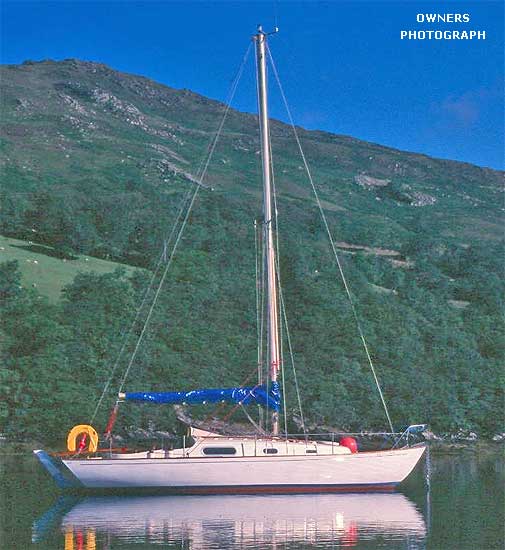
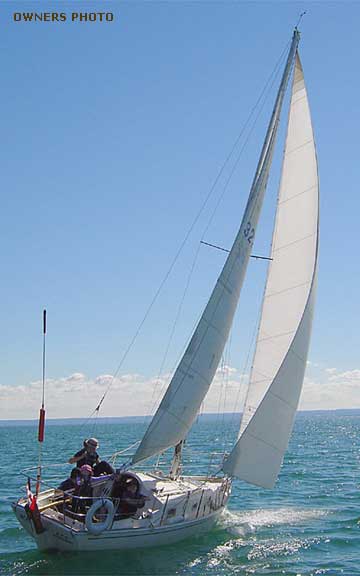
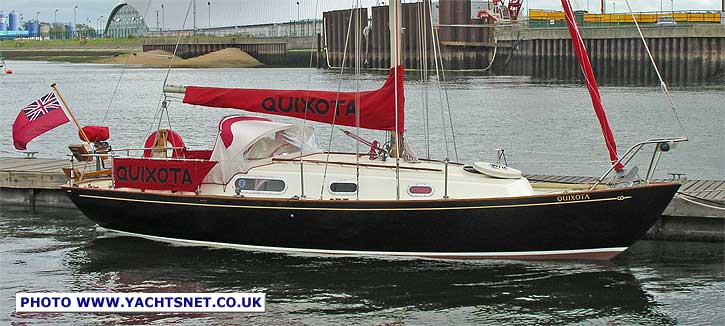
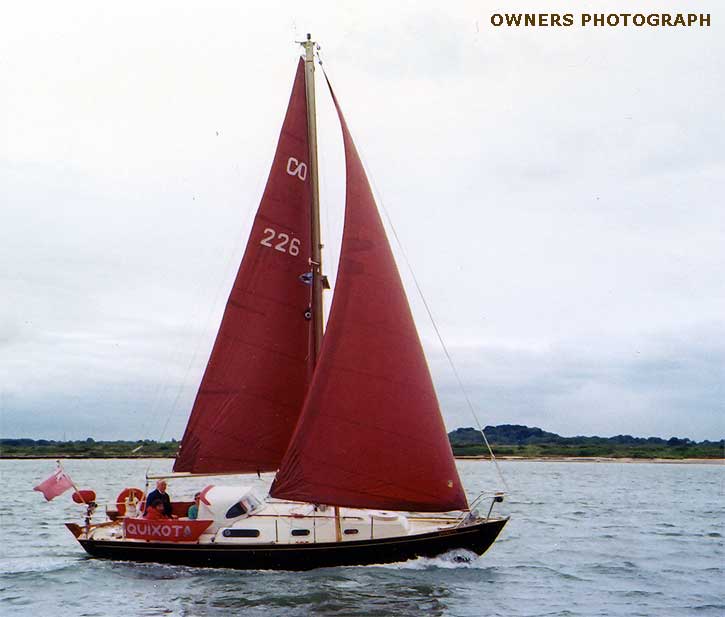
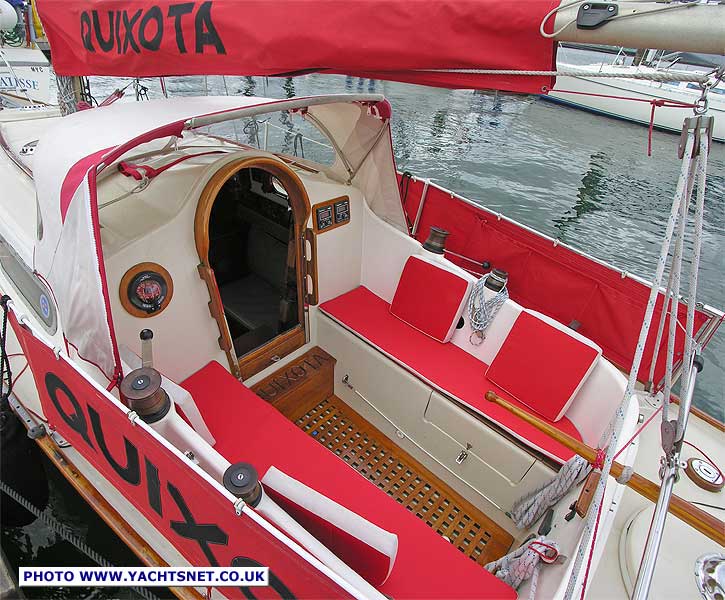
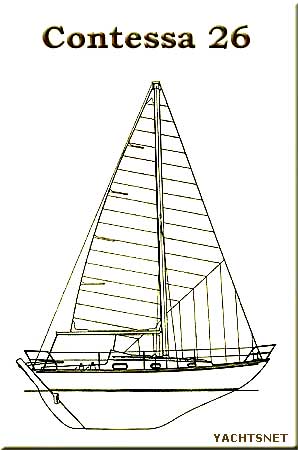
Contessa 26 |
Brief details |
| Builder |
originally Jeremy
Rogers, Lymington, also various other builders (see text
below) |
Designed by
David Sadler and Jeremy Rogers in 1965/66 as a GRP Folkboat
type, the first Contessa 26 was launched in 1966. The first
few boats proved to be very successful racers, including in
long-distance events. They are still sought after as very
attractive and seaworthy small cruisers. |
| LOA |
25' 6" |
Sail area |
244 sq ft (100% foretriangle) or 304 sq ft
main and genoa |
| LWL |
20' 0" |
Rig |
sloop |
| Beam |
7' 6" |
Cabins |
forecabin and saloon |
| Draught |
4' 0" |
Berths |
4 |
| Displacement |
5,400 lbs |
Engine |
originally Vire petrol, most now re-engined |
| Ballast |
2,690 lbs |
BHP |
7 - 12 |
| Keel type |
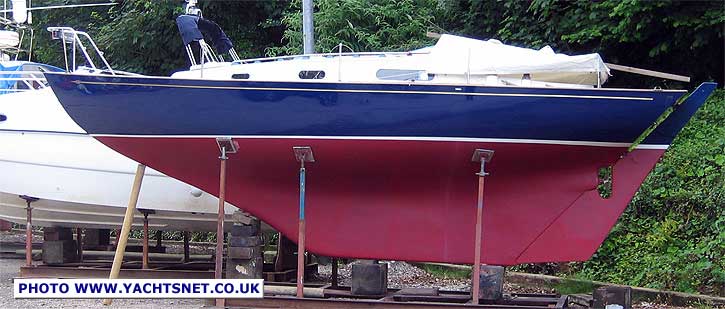
Long keel with encapsulated iron ballast |
|
The Contessa 26's were
originally built by Jeremy Rogers in Lymington from
1966 to 1976, though a few more were built using the
same moulds, first by Chris Carrington and then by Maclan
Marine. About 350 were built in England in total.
Another set of moulds were shipped
to Canada, where they were built under licence by J.
J. Taylor until 1990. They produced another 400 or so
boats, originally being sold as Contessa 26's, but after
1984 being called J J Taylor 26's - some of these later
boats had a slightly modified deck moulding with an
enlarged 'hump' by the hatchway to give greater headroom,
and a slightly revised interior layout, although the
hull always remained the same.
|
|
|
|
 |